18V vs 12V Max Reciprocating Saws in 2026: Key Differences
As an Amazon Associate we earn from qualifying purchases. Links on this page are affiliate links.
This 18V vs 12V Max reciprocating saw comparison looks at two distinct tools. Both units offer variable speed control and cordless operation. The main difference lies in their power systems and package contents. One is a bare tool from Makita, while the other is a complete kit from Milwaukee. You need to check the voltage and included items to see which fits your current setup.
Key differences
| Aspect | Makita 18V Brushless One-Handed Reciprocating Saw | Milwaukee 12V Hackzall Saw Kit |
|---|---|---|
| Voltage | 18V | 12V Max |
| Motor Type | Brushless | not listed |
| Stroke Length | 7/8 in. | 1/2 in. |
| Strokes Per Minute | 0-3,100 SPM | 0-3,000 SPM |
| Battery Included | Tool Only | Kit with battery and charger |
| Weight | 1 pounds | 2.62 pounds |
Which one should you choose?
Choose Makita 18V Brushless One-Handed Reciprocating Saw if
- You already own 18V LXT batteries
- You need a lighter tool for overhead work
- You want a brushless motor for efficiency
Choose Milwaukee 12V Hackzall Saw Kit if
- You need a complete kit right away
- You prefer a compact tool under 3 pounds
- You want a QUIK-LOK blade clamp system
Verdict: Choose the Makita if you already have 18V batteries and want a lighter, brushless tool. Pick the Milwaukee if you need a ready-to-use kit with a battery and charger included. Both tools offer high stroke speeds for different cutting needs.
18V vs 12V Max Reciprocating Saws
Voltage and Power
Voltage is the primary differentiator between these two reciprocating saws. The Makita XRJ08Z operates on an 18V LXT power system, providing higher potential energy to the motor. In contrast, the Milwaukee 2420-21 uses a 12V Max system. Higher voltage generally translates to more sustained power under load, which can be beneficial for cutting through denser materials or thicker metal. The 18V platform is designed for users who need robust performance for demanding tasks. The 12V platform prioritizes lighter duty work where high torque is less critical. You should choose based on the density of materials you cut most often.
Motor Type
The internal motor technology differs significantly between the two tools. The Makita XRJ08Z features a Makita-built brushless motor. Brushless motors are generally more efficient, produce less heat, and have longer lifespans because they lack physical brushes that wear out. The Milwaukee 2420-21 does not explicitly list its motor type in the provided data, so you cannot confirm if it is brushed or brushless. Assuming the Milwaukee uses a traditional brushed motor, the Makita likely offers better efficiency and lower maintenance over time. This is a key spec for long-term reliability.
Stroke Length
Stroke length determines how much material is removed with each pass of the blade. The Makita XRJ08Z has a stroke length of 7/8 inch, which allows for faster material removal and more aggressive cutting. The Milwaukee 2420-21 has a stroke length of 1/2 inch. A shorter stroke provides more control and less vibration, making it easier to maneuver in tight spaces. The Makita’s longer stroke is better for speed, while the Milwaukee’s shorter stroke may feel more manageable for precision work. Your preference depends on whether you prioritize speed or control.
Strokes Per Minute
Both tools offer variable speed triggers, but their maximum stroke rates are similar. The Makita XRJ08Z reaches up to 3,100 strokes per minute (SPM). The Milwaukee 2420-21 reaches up to 3,000 SPM. The difference of 100 SPM is negligible in practical use. Both machines allow you to adjust the speed based on the material. You can slow down for metal and speed up for wood. Since both offer variable control and nearly identical top speeds, neither has a clear advantage in this specific metric. The choice here comes down to other factors like ergonomics or battery ecosystem.
Included Accessories
What you get out of the box varies greatly. The Makita XRJ08Z is sold as a tool only, meaning it does not include a battery or charger. You must already own compatible 18V LXT batteries. The Milwaukee 2420-21 is a kit that includes the saw, a 12V Lithium-Ion battery, a 30-minute charger, a Hackzall blade, and a carrying case. If you do not own Milwaukee 12V tools, the Milwaukee kit is ready to use immediately. The Makita is only suitable if you are already invested in the 18V LXT battery platform.
Which 12V or 18V saw suits you
You need a complete ready-to-use tool
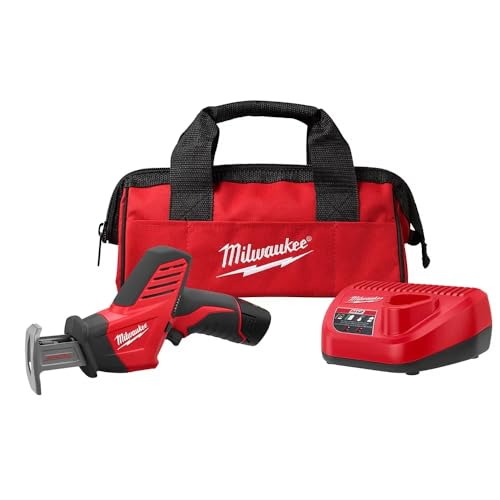
The Milwaukee 2420-21 arrives as a full kit. It includes a 12V lithium-ion battery, a 30-minute charger, a carrying case, and a Hackzall blade. You do not need to purchase separate components. This all-in-one package is ideal if you want a single purchase that provides everything required for immediate operation and storage.
You prioritize cutting speed and power
The Makita XRJ08Z delivers up to 3,100 strokes per minute with a 7/8-inch stroke length. This combination allows for up to 55% faster cutting compared to standard models. The 18V LXT system provides higher potential energy. If you require maximum efficiency and aggressive material removal, this brushless motor offers superior performance metrics.
You value compactness and reduced vibration
Weighing only 1 pound, the Makita XRJ08Z is significantly lighter than the Milwaukee option. It features a low vibration design that reduces shake by up to 40%. The one-handed grip and loop-shaped handle guard improve rigidity. This makes it easier to handle for extended periods or in tight spaces where control is critical.
Quick picks
| # | Product | Best for | Price |
|---|---|---|---|
| 1 | Makita 18V Brushless One-Handed Reciprocating Saw | one-handed cutting with existing 18V batteries | Check price of Makita 18V Brushless One-Handed Reciprocating Saw on Amazon |
| 2 | Milwaukee 12V Hackzall Saw Kit | One-handed cutting in tight spaces | Check price of Milwaukee 12V Hackzall Saw Kit on Amazon |
The products compared

Makita 18V Brushless One-Handed Reciprocating Saw
Best for: one-handed cutting with existing 18V batteries
- Voltage
- 18V (what this guide is about)
- Power Source
- 18V LXT
- Stroke Length
- 7/8 in.
- Strokes Per Minute
- 0-3,100 SPM
- Motor Type
- Brushless
- Battery Included
- Tool Only
View on Amazon: Makita 18V Brushless One-Handed Reciprocating Saw Affiliate link
The Makita XRJ08Z is an 18V LXT brushless reciprocating saw designed for one-handed operation. It delivers 0 to 3,100 strokes per minute with a 7/8-inch stroke length. The tool weighs 1 pound and measures 14.4 inches long. It features a low-vibration design and a loop-shaped handle guard. This compact saw suits users who need a lightweight, high-speed tool for tight spaces or overhead work.
Pros
- Brushless motor provides up to 55% faster cutting
- One-handed grip transmits force firmly to the workpiece
- Low vibration design reduces fatigue by up to 40%
- Lightweight 1-pound build for easy handling
Cons
- Sold as a tool only with no battery included
- Single speed setting limits control on delicate cuts
- No variable speed trigger mentioned in specifications
Good fit if
- You need a lightweight tool for overhead or one-handed use
- You already own 18V LXT batteries
- You prioritize cutting speed and reduced vibration
Skip if
- You require a complete kit with battery and charger
- You need variable speed control for precision work
- You prefer a two-handed grip for maximum stability
Verdict: Makita 18V Compact Reciprocating Saw offers high speed and low vibration in a lightweight package. It is ideal for users who already have 18V batteries and need a tool for one-handed or overhead cutting tasks.
Milwaukee 12V Hackzall Saw Kit
Best for: One-handed cutting in tight spaces
- Voltage
- 12V Max (what this guide is about)
- Power Source
- 12V
- Stroke Length
- 1/2 in.
- Strokes Per Minute
- 0-3,000 SPM
- Battery Included
- Kit with battery and charger
- Battery Capacity
- 12V LITHIUM-ION
View on Amazon: Milwaukee 12V Hackzall Saw Kit Affiliate link
This 12V Hackzall is a compact reciprocating saw built for one-handed use. It delivers up to 3,000 strokes per minute with a half-inch stroke length. The kit includes a 12V lithium-ion battery, a 30-minute charger, and a carrying case. Weighing just 2.62 pounds, it offers portability and ease of use for tight spaces.
Pros
- Variable speed trigger for control
- QUIK-LOK universal blade clamp
- Lightweight 2.62 lb design
- Includes battery and charger
Cons
- Lower 12V power compared to 18V models
- Smaller 0.5-inch stroke length
- Limited to single battery capacity
Good fit if
- You need a one-handed tool
- You work in tight spaces
- You prefer lighter weight tools
Skip if
- You require maximum cutting power
- You need heavy-duty demolition
- You want longer stroke length
Verdict: Milwaukee 12V Hackzall Compact Saw fits users who prioritize portability and control over raw power. It is ideal for precise cuts in confined areas where a larger 18V saw cannot reach.
Specifications side by side
| Spec | Makita 18V Brushless One-Handed Reciprocating Saw | Milwaukee 12V Hackzall Saw Kit |
|---|---|---|
| Power Source | 18V LXT | 12V |
| Stroke Length | 7/8 in. | 1/2 in. |
| Strokes Per Minute | 0-3,100 SPM | 0-3,000 SPM |
| Motor Type | Brushless | not stated |
| Battery Included | Tool Only | Kit with battery and charger |
| Battery Capacity | not stated | 12V LITHIUM-ION |
| Tool Weight | not stated | 2.62 lbs. |
| Tool Length | 14.4 inches | not stated |
| Blade Clamp | not stated | QUIK-LOK Universal 1/2 in. Tang |
| Variable Speed Trigger | not stated | Variable speed |
| Voltage | 18V | 12V Max |
| Dimensions | 14.4 × 4 × 6 inches | 7.2 × 4.76 × 15.4 inches |
| Weight | 1 pounds | 2.62 pounds |
| Color | Teal | Red/Black |
| Model | XRJ08Z | 2420-21 |
| Size | not stated | 15.60 L x 7.70 W x 3.95 H |
Frequently asked questions
Is an 18V reciprocating saw better than a 12V model for heavy cutting?
Yes, the 18V system generally delivers more power for demanding tasks. The Makita XRJ08Z uses an 18V brushless motor to provide higher potential energy. This setup helps it handle thicker materials more effectively than lower-voltage alternatives. You get better performance when cutting dense wood or metal.
Which saw is lighter for overhead work?
The Makita 18V XRJ08Z is the lighter option at just one pound. Its compact design measures 14.4 inches in length. This low weight reduces fatigue during extended overhead cuts. You can hold it comfortably for longer periods compared to heavier tools.
Does the Milwaukee 12V Hackzall come with a battery?
Yes, the Milwaukee 2420-21 is sold as a complete kit. It includes a 12V lithium-ion battery, a charger, a case, and a blade. You do not need to buy separate components to start using it. This makes it ready for immediate use upon unboxing.
Can I use my existing 18V batteries with the Makita saw?
Yes, the Makita XRJ08Z is compatible with the 18V LXT battery system. The listing shows it as a bare tool, meaning it does not include a battery. If you already own Makita 18V batteries, you can insert them directly into the tool for operation.
Which saw fits better in tight spaces?
The Milwaukee 12V Hackzall is designed for confined areas. It measures 7.2 inches in length and weighs 2.62 pounds. Its compact profile allows you to reach into narrow gaps where larger tools cannot fit. This makes it ideal for precise cuts in tight spots.
What is the difference between the motor types in these saws?
The Makita XRJ08Z features a brushless motor, while the Milwaukee model does not specify this feature in its data. Brushless motors typically offer longer life and higher efficiency. They also reduce maintenance needs by eliminating brushes that wear out over time.
Is the Makita saw corded or cordless?
The Makita XRJ08Z is a cordless tool. It operates on an 18V power source and requires a compatible battery. The listing confirms it is a bare tool without an included battery. You must provide your own 18V LXT battery to power it.