Makita or RYOBI? Rotary Hammers Compared in 2026
As an Amazon Associate we earn from qualifying purchases. Links on this page are affiliate links.
The makita vs RYOBI rotary hammer comparison highlights two 18V cordless tools. Both use SDS-PLUS bits and run on 18V LXT or ONE+ batteries. The main difference lies in chuck size and motor type. Makita offers a 7/8-inch chuck with a brushed motor. RYOBI provides a 1-inch chuck with a brushless motor. This affects hole capacity and efficiency. You should check the specs below to see which fits your job site needs.
Key differences
| Aspect | Makita 18V LXT 7/8-Inch SDS-Plus Rotary Hammer | RYOBI 18V Brushless 1-Inch SDS-Plus Rotary Hammer |
|---|---|---|
| Chuck Size | 7/8 In. | 1 in. |
| Motor Type | Makita-built variable speed motor | Brushless |
| Weight | 7.38 lbs. | 6.48 lbs. |
| Blows Per Minute | 0-4,000 BPM | not listed |
| Torque Limiting Clutch | Yes | not listed |
Which one should you choose?
Choose Makita 18V LXT 7/8-Inch SDS-Plus Rotary Hammer if
- You need a 7/8-inch chuck for larger holes.
- You prefer a torque limiting clutch to prevent gear damage.
- You want a tool with a specified 4,000 BPM rate.
Choose RYOBI 18V Brushless 1-Inch SDS-Plus Rotary Hammer if
- You require a 1-inch chuck for the largest SDS-PLUS bits.
- You want a brushless motor for potentially longer runtime.
- You prefer a lighter tool at 6.48 lbs.
Verdict: Choose the Makita if you prioritize a torque limiting clutch and a proven variable speed motor with high BPM. Choose the RYOBI if you need the maximum 1-inch chuck capacity and a lighter weight. Both are tool-only options requiring separate batteries.
Makita vs RYOBI Rotary Hammer
Chuck size
The Makita XRH04Z features a 7/8-inch chuck, while the RYOBI ONE+ model offers a 1-inch chuck. A larger chuck allows you to use bigger bits for more aggressive drilling tasks. The RYOBI’s 1-inch capacity gives it an advantage for heavy-duty masonry work where larger diameters are standard. The Makita’s 7/8-inch size is sufficient for most general construction needs but limits you on larger holes. If you frequently drill wide anchor holes, the RYOBI provides greater versatility. For standard jobs, both sizes are functional, but the RYOBI wins on raw capacity.
Motor type
The RYOBI tool specifies a brushless motor, whereas the Makita uses a Makita-built variable speed motor, which is typically brushed in this class. Brushless motors generally offer longer life and better efficiency because they lack carbon brushes that wear out. This means the RYOBI may require less maintenance over time and run cooler during extended use. The Makita motor delivers 0-1,200 RPM and 0-4,000 BPM, providing strong performance. However, the brushless design in the RYOBI is a technical advantage for durability and power management. You get better long-term reliability with the brushless option.
Weight
Weight is a critical factor when holding a rotary hammer overhead or working in tight spaces. The Makita XRH04Z weighs 7.38 pounds, while the RYOBI ONE+ weighs 6.48 pounds. The RYOBI is nearly one pound lighter, which reduces fatigue during prolonged use. This difference is noticeable when you are drilling vertically into ceilings or working at awkward angles. The lighter build of the RYOBI makes it easier to maneuver for extended periods. The Makita is slightly heavier, which some users might prefer for stability, but the RYOBI offers better comfort for most tasks.
Modes of operation
The Makita XRH04Z explicitly lists a 3-mode operation: Rotation Only, Hammering with Rotation, and Hammering Only. This allows you to use the tool as a standard drill for wood or metal, or switch to hammer mode for concrete. The RYOBI data does not specify the number of modes or their functions. While the RYOBI is a rotary hammer, the lack of explicit mode details in the specs means you cannot confirm if it offers the same versatility for non-hammering tasks. The Makita’s clear three-mode setup provides more predictable control for different materials.
Torque protection
The Makita includes a torque limiting clutch that automatically disengages the gears if the bit binds. This protects the internal mechanism from damage during unexpected resistance. The RYOBI data does not mention a torque limiting clutch or similar safety feature. If you encounter hard rebar or unexpected obstacles, the Makita’s clutch can prevent gear stripping. This is a practical safety feature for professional use where tool damage is costly. The absence of this detail in the RYOBI specs means you cannot assume it has this protection. The Makita wins on mechanical safety.
Which rotary hammer fits your needs
Heavy concrete drilling needs
The RYOBI model features a 1-inch chuck capacity, allowing you to use larger bits for aggressive drilling tasks. Its brushless motor offers efficient power delivery. If you frequently drill large holes in concrete or masonry, this larger chuck size provides the versatility and torque needed for demanding jobs without binding.
Precision and control focused
The Makita XRH04Z includes a torque-limiting clutch that automatically disengages gears if the bit binds. This protects the internal gears from damage during tough operations. For users who prioritize tool longevity and precise control in varied applications, this safety feature and the 7/8-inch chuck offer reliable, controlled performance.
Light duty and portability
Weighing only 6.48 pounds, the RYOBI tool is lighter than the Makita alternative. Its compact dimensions make it easier to handle in tight spaces. If you need a portable solution for lighter SDS-PLUS tasks, the reduced weight and brushless efficiency make this option more comfortable for extended overhead or repetitive work.
The products compared

Makita 18V LXT 7/8-Inch SDS-Plus Rotary Hammer
Best for: Makita users needing high-impact masonry drilling
- Power Source
- 18V
- Chuck Size
- 7/8"
- Bit System
- SDS-PLUS
- Operating Modes
- 3 modes
- Battery Included
- No (bare tool)
- Blows Per Minute
- 0-4,000 BPM
View on Amazon: Makita 18V LXT 7/8-Inch SDS-Plus Rotary Hammer Affiliate link
This Makita rotary hammer is a cordless tool designed for drilling into masonry. It features a 7/8-inch chuck and accepts SDS-PLUS bits. The motor delivers 0-1,200 RPM and 0-4,000 BPM. You get three operation modes for rotation or hammering. It weighs 7.38 pounds. This kit is tool-only, so you must supply your own 18V LXT battery.
Pros
- Variable speed motor reaches 1,200 RPM and 4,000 BPM
- Three-mode operation for rotation only, hammering, or both
- Torque limiting clutch prevents gear damage if the bit binds
- Shock absorbent handle protects the battery housing
Cons
- Sold as a bare tool with no battery included
- Heavier at 7.38 pounds compared to lighter competitors
- Fixed 7/8-inch chuck size limits bit compatibility
Good fit if
- You already own Makita 18V LXT batteries
- You need a dedicated tool for heavy masonry drilling
- You prefer a robust handle for shock absorption
Skip if
- You need a complete kit with a battery and charger
- You require a lighter tool for overhead work
- You prefer a smaller chuck size for fine bits
Verdict: Makita 18V 7/8 in Rotary Hammer suits professionals who already have the power source. It offers durable construction and high impact rates for serious drilling tasks.
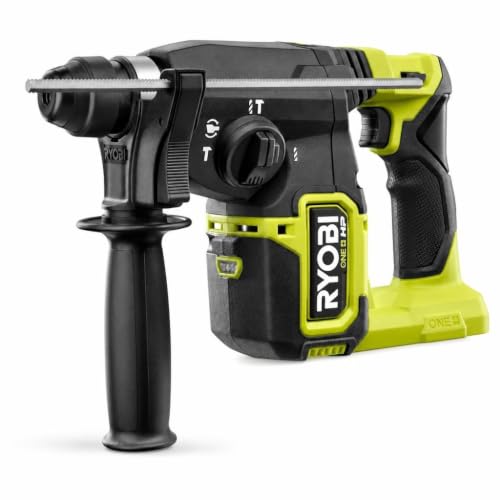
RYOBI 18V Brushless 1-Inch SDS-Plus Rotary Hammer
Best for: RYOBI battery users needing light masonry work
- Power Source
- 18V
- Chuck Size
- 1 in.
- Bit System
- SDS-Plus
- Motor Type
- Brushless
- Battery Included
- No (tool only)
- Weight
- 6.48 lbs.
View on Amazon: RYOBI 18V Brushless 1-Inch SDS-Plus Rotary Hammer Affiliate link
This RYOBI P223 is an 18V cordless rotary hammer featuring a brushless motor and a 1-inch SDS-Plus chuck. It weighs 6.48 lbs and measures 12.7 inches long. The tool-only design means you supply your own battery. It suits users who need a dedicated hammer drill for masonry work without the bulk of a corded unit.
Pros
- Brushless motor for efficiency
- 1-inch SDS-Plus chuck compatibility
- Lightweight 6.48 lb build
- 18V cordless power source
Cons
- Sold as a bare tool without battery
- Single function rotary hammer only
- No variable speed trigger listed
Good fit if
- You already own RYOBI 18V batteries
- You need a lightweight hammer for light masonry
- You want a dedicated rotary hammer tool
Skip if
- You need a drill driver included in the kit
- You require a corded power source
- You need a larger 1-1/8 inch chuck
Verdict: RYOBI 18V Brushless 1 in. SDS-Plus Rotary Hammer fits users who already have RYOBI batteries and need a lightweight tool for occasional drilling. It is not suitable for those needing a complete kit with a drill driver.
Specifications side by side
| Spec | Makita 18V LXT 7/8-Inch SDS-Plus Rotary Hammer | RYOBI 18V Brushless 1-Inch SDS-Plus Rotary Hammer |
|---|---|---|
| Power Source | 18V | 18V |
| Chuck Size | 7/8" | 1 in. |
| Bit System | SDS-PLUS | SDS-Plus |
| Motor Type | not stated | Brushless |
| Operating Modes | 3 modes | not stated |
| Battery Included | No (bare tool) | No (tool only) |
| Blows Per Minute | 0-4,000 BPM | not stated |
| Weight | 7.39 pounds | 6.48 lbs. |
| Voltage | 18V | 18V |
| Included Tools | Rotary Hammer | Drill Driver, Hammer Drill, Rotary Hammer |
| Bit Type | SDS-Plus | SDS-Plus |
| Dimensions | 18 × 4 × 9 inches | 12.7 × 9.09 × 4.45 inches |
| Size | One Size | not stated |
| Color | Black and Blue | Black,green |
| Model | XRH04Z | #P223 |
Frequently asked questions
Is the Makita rotary hammer heavier than the RYOBI model?
Yes, the Makita tool is heavier. It weighs 7.38 pounds, while the RYOBI unit weighs 6.48 pounds. The difference is nearly one pound. You may notice the weight during overhead use. The RYOBI option feels lighter in your hand for extended periods.
Does the RYOBI rotary hammer use a brushless motor?
Yes, the RYOBI model includes a brushless motor. This design typically offers better efficiency and longer runtime than brushed alternatives. The Makita option listed uses a standard brushed motor. You get more consistent power delivery with the RYOBI brushless technology for demanding tasks.
Which tool is better for using large diameter bits?
The RYOBI rotary hammer is better for larger bits. It features a 1-inch chuck capacity. The Makita model is limited to a 7/8-inch chuck. If you need to drill wider holes in concrete, the RYOBI tool provides the necessary compatibility for those larger SDS-Plus bits.
Are batteries included with these rotary hammers?
No, neither tool includes batteries in this listing. Both are sold as bare tools. You must already own compatible 18V batteries to operate them. This makes them ideal for users who already have a system of batteries from Makita or RYOBI for their other tools.
What type of bits do these rotary hammers accept?
Both tools accept SDS-Plus bits. This is the standard bit type for most rotary hammers in this class. You can use a wide variety of masonry drill bits and chisels with either machine. The bit type ensures compatibility with common masonry accessories you likely already own.
Is the Makita rotary hammer suitable for professional concrete drilling?
Yes, the Makita tool is designed for serious drilling tasks. It features durable construction and high impact rates. The 7/8-inch chuck provides stability for professional use. It suits users who need reliable performance for heavy-duty masonry work on a regular basis in construction environments.
Which rotary hammer is more compact in length?
The RYOBI model is shorter in length. It measures 12.7 inches long, while the Makita unit is 18 inches long. The RYOBI design is more compact. This shorter length may offer better maneuverability in tight spaces where the longer Makita tool might be difficult to handle.