Makita XRJ08Z 18V LXT® Lithium-Ion or Makita XRJ01Z 18-Volt LXT Lithium-Ion? Which Makita Model to Buy
As an Amazon Associate we earn from qualifying purchases. Links on this page are affiliate links.
You are comparing the makita xrj08z 18v lxt lithium ion vs xrj01z 18 volt lxt lithium ion. Both are cordless reciprocating saws from Makita that use the 18V LXT battery platform. They share a compact design for close-quarter work and tool-less blade changes. The main difference is the motor technology. The XRJ08Z uses a brushless motor, while the XRJ01Z relies on a standard brushed motor. This changes their speed, stroke length, and vibration levels.
Key differences
| Aspect | Makita 18V LXT Compact Reciprocating Saw | Makita 18V Brushless One-Handed Reciprocating Saw |
|---|---|---|
| Motor Type | Brushed | Brushless |
| Strokes Per Minute | 0-3,000 SPM | 0-3,100 SPM |
| Stroke Length | 1/2 in. | 7/8 in. |
| Tool Length | 15-5/8 in. | 14.4 inches |
| Weight | 3.9 lbs. (with battery) | 1 pounds |
Which one should you choose?
Choose Makita 18V LXT Compact Reciprocating Saw if
- You need a shorter stroke length for finer cuts in tight spaces.
- You prefer a traditional paddle or trigger switch operation.
- You want a tool with a slightly longer overall body for leverage.
Choose Makita 18V Brushless One-Handed Reciprocating Saw if
- You want faster cutting speeds with a longer stroke length.
- You need a lighter tool for overhead or one-handed use.
- You prefer lower vibration for reduced hand fatigue.
Verdict: The XRJ08Z offers superior performance with its brushless motor, longer stroke, and lighter weight. It is the better choice for users who prioritize cutting speed and reduced vibration. The XRJ01Z remains a solid option if you prefer a traditional switch layout and a shorter stroke for detailed work.
Makita XRJ08Z vs XRJ01Z Specs
Motor Type
The Makita XRJ08Z features a brushless motor, while the XRJ01Z uses a standard brushed motor. Brushless motors generally offer longer life, increased power, and better efficiency. This technology allows the XRJ08Z to deliver consistent performance without the friction and heat generated by brushes. You get more runtime and durability from the brushless design. The XRJ01Z relies on traditional brushed technology, which is reliable but may wear faster over time. For long-term use, the brushless advantage is clear. The XRJ08Z is the better choice here for efficiency and longevity.
Stroke Length
Stroke length determines how much material is removed per cut. The XRJ08Z has a 7/8-inch stroke length, whereas the XRJ01Z offers a 1/2-inch stroke. A longer stroke means the saw cuts through material faster and more efficiently. The XRJ08Z removes more debris with each pass, making it ideal for aggressive cutting tasks. The XRJ01Z provides a shorter stroke, which may be sufficient for lighter work but is slower overall. If you need speed and power in demolition or heavy-duty cuts, the longer stroke of the XRJ08Z gives it a significant practical edge.
Strokes Per Minute
Variable speed controls allow you to adjust the cutting pace. The XRJ08Z reaches up to 3,100 strokes per minute, while the XRJ01Z maxes out at 3,000 strokes per minute. This 100 SPM difference is small but noticeable in high-speed cutting scenarios. The XRJ08Z can handle faster cutting demands with a slight advantage in raw speed. Both tools offer variable speed control for precision work. However, the higher maximum RPM of the XRJ08Z makes it slightly more capable for rapid material removal. It is a minor but distinct benefit for power users.
Tool Weight
Weight affects fatigue during extended use. The XRJ08Z weighs only 1 pound as a bare tool, making it extremely light. The XRJ01Z weighs 3.9 pounds when equipped with a battery, or 2.69 pounds as listed in specs without battery context. Even comparing bare weights, the XRJ08Z is significantly lighter. A lighter tool reduces hand fatigue, especially when working overhead or in tight spaces. The XRJ01Z feels heavier in the hand, which some users may prefer for stability. For pure ease of handling and reduced strain, the XRJ08Z is the superior option.
Switch Type
Control methods vary between the two models. The XRJ01Z features a dual-position on/off switch that allows for either paddle or trigger operation. This flexibility lets you choose your preferred control style. The XRJ08Z uses a one-handed grip design with a loop-shaped handle guard for rigidity. It does not list a dual-position switch, focusing instead on the one-handed grip layout. If you prefer the option to switch between paddle and trigger modes, the XRJ01Z offers that versatility. The XRJ08Z prioritizes a dedicated one-handed grip for specific use cases.
Vibration
Vibration levels impact comfort and control. The XRJ08Z is designed with a low vibration feature, claiming up to 40% less vibration. This reduction helps reduce hand fatigue and improves control during prolonged use. The XRJ01Z does not list specific vibration reduction metrics in its data. Less vibration means you can work longer with less discomfort and better precision. The XRJ08Z’s low vibration design is a clear advantage for user comfort and sustained performance. It makes the tool easier to handle for extended periods.
Which Makita Reciprocating Saw Fits Your Work
Users needing high speed and power
The XRJ08Z brushless motor delivers 0 to 3,100 strokes per minute with a 7/8 inch stroke length. This combination allows for up to 55% faster cutting compared to standard models. You get more power per stroke, making it ideal for demanding demolition tasks where efficiency matters most.
Those prioritizing low vibration comfort
This model features a low vibration design that reduces shake by up to 40 percent. The loop-shaped handle guard adds rigidity for better control. If you plan to use the saw for extended periods, the reduced vibration helps minimize fatigue and improves your overall cutting experience.
Professionals requiring one-handed operation
The XRJ08Z is designed for one-handed grip, allowing you to firmly transmit force to the workpiece while using just one hand. This ergonomic design enhances maneuverability in tight spaces. You can maintain better control and stability during complex cuts without needing to support the tool with your other hand.
Users preferring traditional trigger control
The XRJ01Z includes a dual-position on/off switch for either paddle or trigger operation. If you prefer the tactile feedback of a traditional trigger, this model suits you. It offers variable speed control from 0 to 3,000 strokes per minute, providing reliable performance for standard cutting jobs.
The products compared
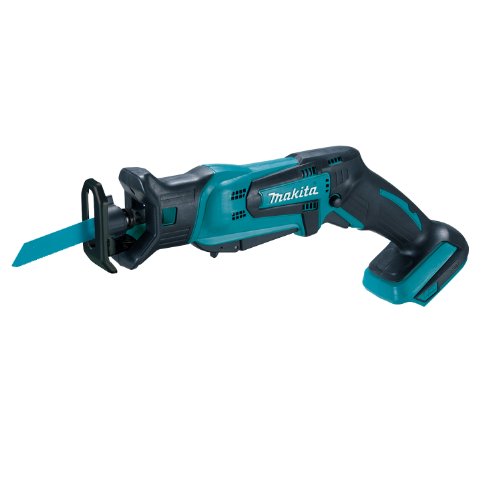
Makita 18V LXT Compact Reciprocating Saw
Best for: close-quarter cutting with existing batteries
- Power Source
- 18V LXT
- Stroke Length
- 1/2 in.
- Strokes Per Minute
- 0-3,000 SPM
- Battery Included
- Bare tool only
- Tool Weight
- 3.9 lbs. (with battery)
- Tool Length
- 15-5/8 in.
View on Amazon: Makita 18V LXT Compact Reciprocating Saw Affiliate link
The Makita XRJ01Z is a cordless reciprocating saw designed for close-quarter cutting. It features a variable speed of 0 to 3,000 strokes per minute and a 1/2-inch stroke length for efficient material removal. The tool weighs 3.9 pounds with a battery and measures 15-5/8 inches long. Its compact design allows you to work in tight spaces. It includes a tool-less blade change system for quick swaps. This bare tool requires a separate 18V LXT battery.
Pros
- Compact 15-5/8-inch length for tight spaces
- Variable speed up to 3,000 SPM
- Tool-less blade change system
- Dual-position on/off switch
Cons
- Sold as a bare tool without a battery
- Heavier than the XRJ08Z at 3.9 pounds
- Single stroke length of 1/2 inch
Good fit if
- You need a saw for tight quarters
- You already own Makita 18V LXT batteries
- You prefer a paddle or trigger switch option
Skip if
- You want a complete kit with a battery
- You need a lighter tool for overhead work
- You require multiple stroke length settings
Verdict: Makita XRJ01Z Compact 18V Reciprocating Saw fits users who already have Makita batteries and need a compact tool for tight spaces. It is a practical choice for those who prioritize length over weight.

Makita 18V Brushless One-Handed Reciprocating Saw
Best for: Lightweight one-handed cutting tasks
- Power Source
- 18V LXT
- Stroke Length
- 7/8 in.
- Strokes Per Minute
- 0-3,100 SPM
- Motor Type
- Brushless
- Battery Included
- Tool Only
- Tool Length
- 14.4 inches
View on Amazon: Makita 18V Brushless One-Handed Reciprocating Saw Affiliate link
This Makita XRJ08Z is a compact, one-handed reciprocating saw powered by the 18V LXT platform. It features a brushless motor that reaches 3,100 strokes per minute with a 7/8-inch stroke length. The design reduces vibration by up to 40% and weighs just one pound. It is ideal for users who need a lightweight tool for overhead or tight-space cutting tasks.
Pros
- Brushless motor delivers up to 3,100 strokes per minute
- 7/8-inch stroke length for efficient cutting
- One-pound weight reduces user fatigue
- Low vibration design for better control
Cons
- Sold as a bare tool without battery
- Single-handed grip may limit power for heavy demolition
- No variable speed trigger mentioned in specifications
Good fit if
- You need a lightweight tool for overhead work
- You already own Makita 18V LXT batteries
- You require a compact saw for tight spaces
Skip if
- You need a complete kit with batteries included
- You prefer two-handed stability for heavy cutting
- You require a corded tool for unlimited runtime
Verdict: Makita 18V Brushless One-Handed Reciprocating Saw fits professionals who prioritize portability and reduced vibration for detailed or overhead cutting tasks.
Specifications side by side
| Spec | Makita 18V LXT Compact Reciprocating Saw | Makita 18V Brushless One-Handed Reciprocating Saw |
|---|---|---|
| Power Source | 18V LXT | 18V LXT |
| Stroke Length | 1/2 in. | 7/8 in. |
| Strokes Per Minute | 0-3,000 SPM | 0-3,100 SPM |
| Motor Type | not stated | Brushless |
| Battery Included | Bare tool only | Tool Only |
| Tool Weight | 3.9 lbs. (with battery) | not stated |
| Tool Length | 15-5/8 in. | 14.4 inches |
| Blade Clamp | Tool-less blade change | not stated |
| Voltage | 18V | 18V |
| Included Tools | Reciprocating Saw | not stated |
| Dimensions | 17 × 4 × 7 inches | 14.4 × 4 × 6 inches |
| Weight | 2.69 pounds | 1 pounds |
| Color | Teal | Teal |
| Model | XRJ01Z | XRJ08Z |
Frequently asked questions
Which Makita reciprocating saw is lighter for overhead work?
The Makita XRJ08Z is the lighter option at 1 pound. The XRJ01Z weighs 2.69 pounds. You should choose the XRJ08Z if you need to hold the tool above your head for extended periods. The reduced weight helps reduce fatigue during detailed or overhead cutting tasks.
Which model is more compact for tight spaces?
The Makita XRJ08Z is more compact with a length of 14.4 inches. The XRJ01Z measures 17 inches long. If you are working in close quarters, the shorter XRJ08Z provides better maneuverability. It fits easier into confined areas where the longer XRJ01Z might struggle to fit.
Do these tools come with batteries included?
Neither model includes a battery. Both are sold as bare tools. You must purchase 18V LXT batteries separately to use either saw. This allows you to use existing Makita batteries if you already own them, but you cannot operate the tool without a compatible power source.
What is the difference in motor technology between these models?
The XRJ08Z features a brushless motor, while the XRJ01Z uses a brushed motor. Brushless motors offer increased efficiency and longer life. They also reduce friction for better performance. If you prioritize durability and consistent power output, the brushless technology in the XRJ08Z is the better technical choice.
Can I use these saws for one-handed cutting?
The XRJ08Z is designed specifically for one-handed cutting tasks. Its lightweight build at 1 pound makes it suitable for this. The XRJ01Z is heavier and longer, making it less ideal for one-handed use. You should select the XRJ08Z if you frequently need to cut with one hand.
Are both saws part of the same battery platform?
Yes, both tools operate on the 18V LXT Lithium-Ion platform. You can use any 18V LXT battery with either saw. This compatibility means you do not need different battery types for each tool. It simplifies your inventory if you already have Makita 18V tools.