Milwaukee or Makita? Rotary Hammers Compared in 2026
As an Amazon Associate we earn from qualifying purchases. Links on this page are affiliate links.
The milwaukee vs makita rotary hammer debate centers on two capable cordless options. Both tools run on 18V systems and use SDS-Plus bits for concrete drilling. They share brushless motor technology for efficiency and durability. The main difference lies in chuck size and control features. You need to check if you prefer a 1-inch or 7/8-inch chuck. This guide compares their specs to help you decide which fits your job site needs.
Key differences
| Aspect | Milwaukee M18 FUEL 1-Inch SDS-Plus Rotary Hammer | Makita 18V LXT 7/8-Inch SDS-Plus Rotary Hammer |
|---|---|---|
| Chuck Size | 1 In. | 7/8 In. |
| Weight | 7.54 lbs. | 7.38 lbs. |
| RPM | not listed | 0-1,200 RPM |
| BPM | not listed | 0-4,000 BPM |
| Special Features | AUTOSTOP Control | 3-mode operation, Torque limiting clutch |
Which one should you choose?
Choose Milwaukee M18 FUEL 1-Inch SDS-Plus Rotary Hammer if
- You need a larger 1-inch chuck for bigger bits.
- You want AUTOSTOP Control to sense bind-ups.
- You are already invested in the M18 System.
Choose Makita 18V LXT 7/8-Inch SDS-Plus Rotary Hammer if
- You prefer a lighter tool at 7.38 lbs.
- You need variable speed control up to 1,200 RPM.
- You want 3-mode operation for different drilling tasks.
Verdict: Choose the Milwaukee if you require a larger 1-inch chuck and automatic bind-up detection. Pick the Makita if you prioritize a lighter weight and precise variable speed control. Both are solid 18V options for professional use.
Milwaukee vs Makita Rotary Hammers
Chuck Size
The Milwaukee M18 FUEL 1-Inch SDS-Plus Rotary Hammer features a 1-inch chuck capacity. This larger opening allows you to use bigger and heavier-duty SDS-Plus bits. The Makita 18V LXT 7/8-Inch SDS-Plus Rotary Hammer uses a 7/8-inch chuck. While both accept standard SDS-Plus bits, the Milwaukee’s larger chuck provides more room for robust drill bits. If you frequently use larger diameter bits for wide holes, the Milwaukee offers a clear mechanical advantage. The Makita remains suitable for standard tasks but limits maximum bit size slightly.
Weight
Weight affects how much fatigue you feel during extended overhead or vertical drilling sessions. The Milwaukee M18 FUEL model weighs 7.54 pounds. The Makita 18V LXT tool weighs 7.38 pounds. The Makita is lighter by 0.16 pounds. This small difference may feel negligible in short bursts but could matter during all-day use. The Milwaukee is slightly heavier, which some users prefer for stability. However, the Makita holds a slight edge for those prioritizing minimal weight in a handheld rotary hammer.
Control Features
Both tools include safety and control mechanisms to protect you and the tool. The Milwaukee features AUTOSTOP Control, which senses bind-ups and stops the bit to prevent kickback. The Makita includes a torque limiting clutch that automatically disengages gears if the bit binds, preventing gear damage. Both systems address common drilling hazards. The Milwaukee focuses on immediate stoppage for safety, while the Makita emphasizes mechanical protection of internal components. These features serve similar protective purposes through different engineering approaches, resulting in a functional tie for user protection.
Speed Settings
Speed control allows you to match the tool to the material hardness. The Makita 18V LXT Rotary Hammer offers a variable speed motor with a range of 0 to 1,200 RPM and 0 to 4,000 BPM. This data is explicitly listed for the Makita. The Milwaukee M18 FUEL specifications do not list specific RPM or BPM ranges in the provided data. Because the Makita provides clear variable speed data, it offers a transparent advantage for users needing precise speed adjustment. The Milwaukee’s speed capabilities are unspecified in the current data set.
Operating Modes
Operating modes determine how the tool impacts the material. The Makita 18V LXT Rotary Hammer features a 3-mode operation switch. You can select Rotation Only, Hammering with Rotation, or Hammering Only. This flexibility allows you to use the tool as a standard drill or a pure hammer drill. The Milwaukee M18 FUEL specifications do not list specific operating modes in the provided data. The Makita’s explicit three-mode capability provides a clear advantage for versatility. The Milwaukee’s mode options are not detailed in the current data set.
Choose the right rotary hammer
Users needing maximum bit capacity
You should choose the Milwaukee model if you regularly use larger diameter bits. Its 1-inch chuck provides more room for heavy-duty SDS-Plus tools than the Makita. This larger capacity supports bigger drilling tasks in concrete. The brushless motor ensures consistent power delivery. You get a robust tool built for demanding applications where bit size matters most.
Professionals valuing lightweight portability
The Makita tool weighs 7.38 pounds, making it the lighter option compared to the Milwaukee. This reduced weight helps reduce fatigue during extended overhead work. You benefit from a compact design that fits easily into tight spaces. The shock-absorbent handle adds comfort. If you prioritize carrying the tool all day, the lighter frame is a practical advantage for your workflow.
Workers requiring precise control modes
The Makita offers three distinct operation modes: rotation only, hammering with rotation, and hammering only. This versatility allows you to switch tasks without changing bits. The torque-limiting clutch protects gears from bind-ups. You gain better control over delicate chiseling or standard drilling. These specific modes provide flexibility that the Milwaukee does not explicitly list in its specifications.
Users preferring automatic bind protection
The Milwaukee features AUTOSTOP Control that senses bind-ups automatically. This system helps prevent gear damage by reacting to resistance. You get a safety feature that engages without manual adjustment. The tool integrates with the M18 system for broad compatibility. If you want a rotary hammer that actively manages binding events, this automated protection offers a distinct operational benefit.
The products compared
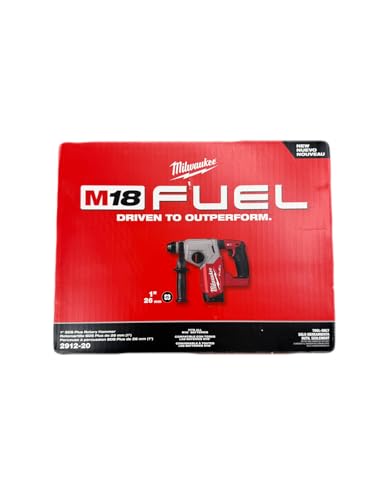
Milwaukee M18 FUEL 1-Inch SDS-Plus Rotary Hammer
Best for: M18 users needing 1-inch SDS-plus capacity
- Power Source
- 18V
- Chuck Size
- 1 In.
- Bit System
- SDS-plus
- Motor Type
- Brushless
- Weight
- 7.54 lbs.
- Included Tools
- Rotary Hammer
View on Amazon: Milwaukee M18 FUEL 1-Inch SDS-Plus Rotary Hammer Affiliate link
The Milwaukee M18 Fuel is a 18V brushless rotary hammer with a 1-inch SDS-plus chuck. It weighs 7.54 pounds and measures 15 inches long. The AUTOSTOP Control senses bind-ups to protect the tool. This kit suits users already invested in the M18 system. You get fast drilling boosts for productivity. It is a cordless solution for heavy-duty masonry work.
Pros
- Brushless motor for efficiency
- AUTOSTOP Control prevents bind-ups
- 1-inch SDS-plus chuck capacity
- 18V M18 system compatibility
Cons
- Heavier at 7.54 pounds
- Larger 15-inch length
- No battery or charger included
Good fit if
- You need a 1-inch SDS-plus chuck
- You use the M18 battery system
- You want AUTOSTOP bind-up protection
Skip if
- You prefer lighter tools under 7 pounds
- You need a smaller 7/8-inch chuck
- You want a complete kit with batteries
Verdict: Milwaukee M18 Fuel 1" Rotary Hammer fits pros using the M18 ecosystem who need 1-inch capacity and bind-up protection.

Makita 18V LXT 7/8-Inch SDS-Plus Rotary Hammer
Best for: Makita battery owners needing SDS-Plus bits
- Power Source
- 18V
- Chuck Size
- 7/8"
- Bit System
- SDS-PLUS
- Operating Modes
- 3 modes
- Battery Included
- No (bare tool)
- Blows Per Minute
- 0-4,000 BPM
View on Amazon: Makita 18V LXT 7/8-Inch SDS-Plus Rotary Hammer Affiliate link
This Makita tool delivers 0 to 1,200 RPM and 0 to 4,000 BPM for synchronized drilling. It features a 7/8 inch chuck and SDS-Plus bit compatibility. The variable speed motor and three-mode operation handle rotation, hammering, or both. Weighing 7.38 pounds, it includes a shock-absorbent handle. You get a bare tool, so you must supply your own 18V battery.
Pros
- Variable speed motor reaches 1,200 RPM
- Three-mode operation for versatile use
- Torque limiting clutch prevents gear damage
- Synchronized RPM and BPM for faster drilling
Cons
- Smaller 7/8 inch chuck size compared to 1 inch competitors
- Sold as a bare tool with no battery included
- Heavier at 7.38 pounds than some lighter alternatives
Good fit if
- You need a tool compatible with standard SDS-Plus bits
- You already own Makita 18V LXT batteries
- You require a torque limiting clutch for safety
Skip if
- You require a 1 inch chuck for larger bits
- You need a complete kit with a battery included
- You prefer a lighter tool under 7 pounds
Verdict: Makita 18V 7/8" SDS-Plus Rotary Hammer suits users who already have Makita batteries and need reliable SDS-Plus compatibility with a protective clutch system.
Specifications side by side
| Spec | Milwaukee M18 FUEL 1-Inch SDS-Plus Rotary Hammer | Makita 18V LXT 7/8-Inch SDS-Plus Rotary Hammer |
|---|---|---|
| Power Source | 18V | 18V |
| Chuck Size | 1 In. | 7/8" |
| Bit System | SDS-plus | SDS-PLUS |
| Motor Type | Brushless | not stated |
| Operating Modes | not stated | 3 modes |
| Battery Included | not stated | No (bare tool) |
| Blows Per Minute | not stated | 0-4,000 BPM |
| Weight | 7.54 lbs. | 7.39 pounds |
| Voltage | 18V | 18V |
| Included Tools | Rotary Hammer | Rotary Hammer |
| Bit Type | SDS-Plus | SDS-Plus |
| Dimensions | 13 × 15 × 5 inches | 18 × 4 × 9 inches |
| Color | Black Red Grey | Black and Blue |
| Model | 2912-20 | XRH04Z |
| Size | not stated | One Size |
Frequently asked questions
Is the Milwaukee rotary hammer heavier than the Makita model?
Yes, the Milwaukee tool weighs 7.54 pounds, while the Makita unit is slightly lighter at 7.38 pounds. The Milwaukee model also has a longer body length of 13 inches compared to the Makita’s 18-inch length. This weight difference may affect your fatigue levels during extended overhead use.
Does the Milwaukee tool offer better bind-up protection?
The Milwaukee M18 FUEL model includes specific bind-up protection features. This helps prevent the bit from getting stuck in the material. The Makita tool features a protective clutch system instead. Both systems aim to protect the tool and user, but the Milwaukee design focuses on immediate bit release.
Which rotary hammer has the larger chuck capacity?
The Milwaukee rotary hammer has the larger 1-inch chuck capacity. The Makita model features a 7/8-inch chuck size. The Milwaukee’s larger opening allows you to use bigger and heavier-duty SDS-Plus bits. This makes it better suited for more demanding drilling tasks in hard concrete.
Are both rotary hammers cordless and brushless?
Yes, both tools are cordless and feature brushless motors. The Milwaukee model operates on the 18V M18 system. The Makita tool runs on the 18V LXT system. Brushless motors provide greater efficiency and longer runtime. You should choose based on which battery ecosystem you already own.
What is the weight difference between these two rotary hammers?
The weight difference is minimal at 0.16 pounds. The Milwaukee tool weighs 7.54 pounds. The Makita tool weighs 7.38 pounds. This small variance is unlikely to significantly impact your daily usage. You should focus more on chuck size and control features when deciding between them.
Can I use SDS-Plus bits with both rotary hammers?
Yes, both rotary hammers accept SDS-Plus bits. The Milwaukee model supports bits up to 1-inch capacity. The Makita model supports bits up to 7/8-inch capacity. This shared compatibility means you can use many of the same drill bits for both tools, though the Milwaukee handles larger diameters.