RYOBI ONE+ Brushless One-Handed Reciprocating or RYOBI ONE+ HP 18V Brushless? Which RYOBI Model to Buy
As an Amazon Associate we earn from qualifying purchases. Links on this page are affiliate links.
You are comparing ryobi one brushless one handed reciprocating vs one hp 18v brushless models. Both tools feature brushless motors and operate on the 18V ONE+ platform. They share tool-free blade change systems and bare tool packaging. The main difference lies in their design philosophy. The first option prioritizes compactness for tight spaces. The second offers higher power and extended stroke length for aggressive cutting tasks. You must choose based on your specific job requirements.
Key differences
| Aspect | RYOBI ONE+ Brushless One-Handed Reciprocating Saw | RYOBI ONE+ HP 18V Brushless Reciprocating Saw |
|---|---|---|
| Motor Type | Brushless | Brushless |
| Strokes Per Minute | Up to 3,000 SPM | 0-3,200 SPM |
| Stroke Length | not listed | 1-1/4 inches |
| Tool Length | 14.8 inches | 19.2 inches |
| Tool Weight | 3.75 pounds | 7.2 pounds |
| Additional Features | Compact one-handed design | LED work light, rafter hook, pivoting shoe |
Which one should you choose?
Choose RYOBI ONE+ Brushless One-Handed Reciprocating Saw if
- You need a saw for tight spaces and overhead applications.
- You prioritize a lighter tool for reduced fatigue.
- You want a compact profile for maneuverability.
Choose RYOBI ONE+ HP 18V Brushless Reciprocating Saw if
- You require faster cutting speeds and more power.
- You need a longer stroke length for aggressive cuts.
- You want extra features like an LED light and pivoting shoe.
Verdict: Choose the RYOBI ONE+ HP 18V Brushless Compact model if you need a lightweight tool for tight spaces. Pick the GEN II HP model if you demand maximum cutting power and speed for demanding demolition work. Both tools are compatible with the same 18V battery system.
Compact vs Power: Key Differences
Tool size and weight
The RYOBI ONE+ Brushless One-Handed Reciprocating Saw (PSBRS01B) is designed for tight spaces. It measures 14.8 inches in length and weighs just 3.75 pounds. This compact profile allows you to maneuver easily in overhead applications or confined areas. In contrast, the ONE+ HP 18V Brushless Reciprocating Saw (GEN II) (PBLRS02B) is larger and heavier. It extends to 19.2 inches and tips the scales at 7.2 pounds. The significant weight difference means the first model is easier to hold for extended periods, while the second offers a more substantial feel for aggressive cutting tasks.
Cutting speed and power
Speed varies between these two brushless models. The PSBRS01B delivers up to 3,000 strokes per minute. This high rate ensures fast, efficient cutting through wood, metal, and plastic. The PBLRS02B GEN II pushes this further with a variable speed trigger ranging from 0 to 3,200 SPM. The data notes it features a 1-1/4 inch stroke length, which contributes to its claim of being the most powerful RYOBI reciprocating saw. If you need maximum aggressive cutting power and adjustable speed control, the second model has the edge. If you prefer a fixed high speed, the first is sufficient.
Ergonomics and control
Comfort during use differs notably. The PSBRS01B focuses on a one-handed design, making it ideal for users who need to support the tool with a single hand in awkward positions. The PBLRS02B GEN II includes a rubber overmold grip to reduce vibration and fatigue. It also features a non-marring pivoting shoe for improved cut control and surface protection. Additionally, the GEN II includes a built-in LED work light and a rafter hook for storage. These features provide better overall control and visibility, giving the second model an advantage for detailed or prolonged work.
Blade change system
Both tools utilize a tool-free blade change system to minimize downtime. The PSBRS01B uses a rapid blade change system for quick swaps between different blade types. The PBLRS02B GEN II features a tool-free blade release lever. While both allow you to swap blades without extra tools, the specific mechanism differs. The GEN II lever is described as minimizing downtime effectively. Since both achieve the same goal of quick changes, neither has a clear advantage here. You can swap blades efficiently on either model, keeping your workflow uninterrupted regardless of the material you are cutting.
Power source compatibility
Both saws operate on the RYOBI ONE+ 18V platform. The PSBRS01B is compatible with over 300 ONE+ batteries, though the battery and charger are sold separately. The PBLRS02B GEN II also uses 18V cordless power and is sold as a bare tool. This means you can use any existing RYOBI 18V battery with either saw. There is no difference in battery compatibility or power source type. You can choose based on size and power needs without worrying about which battery fits. Both integrate seamlessly into the broader ONE+ ecosystem for consistent power delivery across your other tools.
Which RYOBI Reciprocating Saw Fits Your Job
Demolition pros needing maximum cutting power
The RYOBI ONE+ HP 18V Brushless Reciprocating Saw delivers up to 3,200 SPM and a 1-1/4 inch stroke length. This aggressive motor design allows for faster cutting through wood, metal, and plastic. The variable speed trigger gives you precise control, while the built-in LED light illuminates dark work areas for better accuracy.
Electricians working in tight overhead spaces
The RYOBI ONE+ Brushless One-Handed Reciprocating Saw weighs only 3.75 pounds and measures 14.8 inches long. Its compact, one-handed design lets you maneuver easily in confined areas. The tool-free blade change system helps you swap blades quickly without stopping, making it ideal for overhead applications where balance and reach matter most.
Contractors prioritizing ergonomics and reduced fatigue
The RYOBI ONE+ HP 18V Brushless Reciprocating Saw features a rubber overmold grip that reduces vibration and fatigue during extended use. The non-marring pivoting shoe improves cut control and protects surfaces. With up to 470 cuts per charge, this heavy-duty tool minimizes downtime and keeps you productive on aggressive jobsites.
The products compared

RYOBI ONE+ Brushless One-Handed Reciprocating Saw
Best for: tight space demolition with existing batteries
- Power Source
- 18V
- Strokes Per Minute
- Up to 3,000 SPM
- Motor Type
- Brushless
- Battery Included
- Tool only
- Tool Weight
- 3.75 pounds
- Tool Length
- 14.8 inches
View on Amazon: RYOBI ONE+ Brushless One-Handed Reciprocating Saw Affiliate link
This compact 18V reciprocating saw features a brushless motor delivering up to 3,000 strokes per minute. Weighing 3.75 pounds with a 14.8-inch length, it fits tight spaces. The tool-free blade clamp allows quick swaps. It is part of the ONE+ system, requiring a separate battery. You get fast cutting for demolition and renovation without the bulk of a full-sized tool.
Pros
- Brushless motor provides up to 3,000 SPM
- Compact 14.8-inch length fits tight spaces
- Lightweight 3.75-pound design for overhead work
- Tool-free blade change system
Cons
- Heavier than standard one-handed models
- Battery and charger sold separately
- No variable speed trigger listed
Good fit if
- You need a compact tool for overhead cuts
- You already own ONE+ 18V batteries
- You work in tight demolition spaces
Skip if
- You require a variable speed trigger
- You want a complete kit with battery
- You prefer a lighter standard-sized saw
Verdict: RYOBI ONE+ HP Brushless One-Handed Recip Saw is a compact powerhouse for users who already have ONE+ batteries. It suits those who need to cut in tight spaces and value the tool-free blade change system over variable speed control.
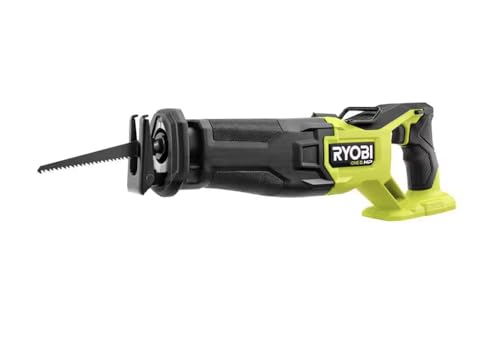
RYOBI ONE+ HP 18V Brushless Reciprocating Saw
Best for: High-speed cutting and aggressive demolition tasks
- Power Source
- 18V Cordless
- Stroke Length
- 1-1/4"
- Strokes Per Minute
- 0-3,200 SPM
- Motor Type
- Brushless
- Battery Included
- Tool only
- Tool Weight
- 7.2 pounds
View on Amazon: RYOBI ONE+ HP 18V Brushless Reciprocating Saw Affiliate link
This is the RYOBI ONE+ HP 18V Brushless Cordless Reciprocating Saw (Tool Only) GEN II. It features a brushless motor delivering up to 3,200 strokes per minute with a 1-1/4-inch stroke length. The tool weighs 7.2 pounds and measures 19.2 inches in length. It includes a tool-free blade release lever and a variable speed trigger. This model suits users needing high cutting speed and durability for aggressive jobs.
Pros
- Brushless motor provides up to 3,200 SPM for fast cutting
- Tool-free blade release lever minimizes downtime
- Rubber overmold grip reduces vibration and fatigue
- Built-in LED work light illuminates the cutting area
Cons
- Heavier at 7.2 pounds compared to standard one-handed models
- Longer 19.2-inch length may reduce maneuverability in tight spaces
- Sold as a bare tool without battery or charger
Good fit if
- You need maximum cutting speed for aggressive demolition tasks
- You already own RYOBI 18V ONE+ batteries
- You prefer a durable brushless motor for extended runtime
Skip if
- You require a lightweight tool for overhead or one-handed use
- You need a complete kit with battery and charger included
- You prioritize compact size for confined workspaces
Verdict: RYOBI ONE+ HP 18V Brushless Reciprocating Saw delivers high power and speed for demanding jobs. It fits users who already have batteries and need a durable tool for aggressive cutting rather than lightweight precision work.
Specifications side by side
| Spec | RYOBI ONE+ Brushless One-Handed Reciprocating Saw | RYOBI ONE+ HP 18V Brushless Reciprocating Saw |
|---|---|---|
| Power Source | 18V | 18V Cordless |
| Stroke Length | not stated | 1-1/4" |
| Strokes Per Minute | Up to 3,000 SPM | 0-3,200 SPM |
| Motor Type | Brushless | Brushless |
| Battery Included | Tool only | Tool only |
| Tool Weight | 3.75 pounds | 7.2 pounds |
| Tool Length | 14.8 inches | 19.2 inches |
| Blade Clamp | Tool-free | Tool-free blade release lever |
| Variable Speed Trigger | not stated | Variable speed trigger |
| Voltage | 18V | 18V |
| Included Tools | Reciprocating Saw | Reciprocating Saw |
| Dimensions | 14.8 × 7.28 × 3.5 inches | 19.2 × 6.14 × 3.27 inches |
| Weight | 3.75 pounds | 7.2 pounds |
| Size | Compact | not stated |
| Color | Ryobi Green | Green/Black |
| Model | #PSBRS01B | PBLRS02B |
Frequently asked questions
Is the one-handed reciprocating saw powerful enough for standard demolition?
Yes, it handles standard tasks well despite its small size. The compact design measures 14.8 inches long and weighs only 3.75 pounds. This makes it easier to control in tight spaces than larger models. You get a brushless motor for efficiency without the bulk of a full-size saw.
Does the HP model cut faster than the one-handed version?
The HP model is built for aggressive cutting and high speed. It features a 1-1/4 inch stroke length and delivers up to 3,200 strokes per minute. This allows for faster material removal compared to the compact one-handed saw, which prioritizes maneuverability over raw cutting speed.
Can I use my existing RYOBI ONE+ batteries with these tools?
Both tools are part of the RYOBI ONE+ 18V platform. They are sold as bare tools, meaning no battery or charger is included. You can use any compatible 18V ONE+ battery you already own to power either the compact one-handed saw or the larger HP model.
Which saw is better for working in overhead positions?
The one-handed reciprocating saw is better for overhead work. It weighs just 3.75 pounds and has a compact length of 14.8 inches. This lighter profile reduces fatigue when holding the tool above your head. The HP model is significantly heavier at 7.2 pounds, making it less ideal for extended overhead use.
Do both models include a tool-free blade change system?
Yes, both reciprocating saws feature a tool-free blade change system. This allows you to swap blades quickly without needing additional tools. You can change blades rapidly to adapt to different materials, whether you are using the compact one-handed model or the more powerful HP version.
Is the HP model too bulky for tight spaces?
The HP model is larger and heavier than the one-handed version. It measures 19.2 inches in length and weighs 7.2 pounds. This size makes it less suitable for very tight spaces where the 14.8-inch one-handed saw excels. Choose the HP model for open areas where power is more important than compactness.